War Inc: Rising
- 4.3
- Rating
- 1.00M
- Installs
- Free
- Price

 Analysis by App-foxy
War Inc: Rising is the kind of strategy game that immediately asks for your attention rather than quietly filling a spare minute. I spent time with it as a mobile war game and found a focused experience built around the appeal of building strength, making decisions under pressure, and trying to turn a small advantage into control of the battlefield. Its short store description, “War Inc,” is blunt, while the broader promise of rising, conquering, and ruling gives a clear idea of the intended mood.
That mood will appeal to players who enjoy planning more than reflexes. I like strategy games most when a decision has a cost, and this one is best approached with patience instead of constant tapping. It is free to download, which makes trying it straightforward, but the presence of optional purchases means the sensible question is not simply whether it costs anything to start. The more useful question is whether the game remains enjoyable when I choose to play carefully rather than spend.
How the strategy experience feels from the first sessions
Fastone Games is the developer behind this release, and the game sits firmly in the strategy category. The basic attraction is easy to understand: I enter a conflict, look for the most efficient route forward, and try to make progress without wasting the resources or opportunities available to me. That creates a more deliberate rhythm than an arcade game. I am not opening it only to react quickly; I am opening it to think about what I should do next.
You May Also Like

 Google Keep - Notes and lists
Google Keep’s Quiet Growth Shows the Appeal of Simpler Notes
As mobile work gets busier, Google Keep keeps winning a simple contest: capture a thought quickly, find it later, and get on with the day.

 Blood Strike: 2.5 Anniversary
Blood Strike’s Loadouts Turn Every Drop Into a Tactical Gamble
A close look at Blood Strike’s custom loadouts: how fast access to signature weapons reshapes its battle royale rhythm, rewards preparation, and narrows the gap between fights.

 Pandora - Music & Podcasts
Pandora’s Music Is Easy to Start, but Harder to Recover
Pandora’s strength is its low-effort path from a seed to a station. Its weak spot is how much confidence it asks you to place in connection, setup, and quiet recovery.

 8 Ball Pool
 Is Built on Rivalries, Rematches, and Routine
A close look at the rivalries, rematches, shared routines, and unanswered safety questions that turn a quick pool match into a persistent mobile community.

 Samsung Music
’s Quiet Strength Is Playing What You Already Own
Its reach comes less from spectacle than from dependable access to a personal library. That simplicity is both the app’s strongest retention engine and its ceiling.

 AccuWeather: Weather Radar
AccuWeather Review: A Quick, Clear Forecast for Everyday Decisions
For everyday plans, the best forecast is the one you can understand quickly. AccuWeather makes rain timing, radar, and local conditions easy to act on, with a few trade-offs.
More From Our News Desk



The strongest way to approach the early game is to treat every action as information. Rather than chasing the most impressive-looking option immediately, I would first watch how the game rewards preparation, how quickly progress moves, and where it places pressure on the player. This matters because strategy games can feel generous at the beginning and demanding later. A player who learns the underlying rhythm early is less likely to feel pushed into purchases when the challenge increases.
In an everyday scenario, I can see myself playing during a commute or while waiting for an appointment, but not as a completely mindless distraction. I would check the current situation, decide on a priority, and stop after completing a meaningful piece of progress. That makes it a better fit for someone who enjoys short planning sessions than for someone looking for a long, uninterrupted campaign every time they pick up a phone.
The game is rated for Everyone 10+, so it is aimed at a broad audience while still acknowledging that its war theme may not be suitable for very young children. That feels like a useful expectation setter. I would recommend parental awareness for younger players, especially because free-to-play games can make purchase decisions part of the experience even when the initial download costs nothing.
Progress feels better when I resist the obvious shortcut
One of my main recommendations is to avoid spending immediately just because an upgrade or advantage is available. In a strategy game, the first tempting purchase can hide whether the problem is genuinely difficult or whether I simply have not learned the correct order of actions. Waiting gives me a clearer sense of the game’s normal pace. It also helps separate a useful convenience from a purchase that only feels attractive because the game has created urgency.
This approach reveals an important trade-off. Spending may make a particular moment smoother, but it can also remove the tension that makes strategic progress satisfying. If I solve every obstacle by paying, I learn less about the game’s systems and may reach later content without developing the habits needed to handle it. For me, the better workflow is to play naturally first, identify the point where friction becomes consistent, and only then decide whether a purchase is worth considering.
The current version is 0.8.6, which is worth keeping in mind when judging the experience. A version number like this suggests a game that is still in an active stage of development rather than a completely settled product, although the number alone does not tell me what future changes will bring. I would keep expectations flexible and avoid treating the present balance as permanent.
Another practical tip is to make progress decisions with a short-term goal in mind. Instead of trying to improve everything at once, I would choose one immediate objective and observe what it unlocks or enables. This reduces wasted effort and makes it easier to tell whether a setback came from poor planning, insufficient preparation, or a deliberate difficulty wall. That kind of self-check is more valuable here than simply repeating the same action faster.
Where spending changes the conversation
The game is free to play, with individual in-app purchase items ranging from $0.99 to $99.99. That is a wide span, and it changes how I evaluate the experience. A low-cost optional purchase can feel like a modest convenience, while the upper end represents a much more serious spending decision. I would not recommend approaching the store casually, especially if the player is prone to buying whenever progress slows down.
I appreciate that the purchase range is visible enough to make budgeting possible, but visibility is not the same as fairness. The important issue is how often the game places the player in a situation where spending feels necessary. I cannot responsibly claim that purchases are harmless, essential, or dominant without more specific evidence about how they affect progress. My honest advice is therefore practical: set a personal limit before playing, and do not make that limit in the middle of a frustrating session.
For families, device owners, and anyone sharing a phone or tablet, purchase controls are especially important. A free game with optional items can become expensive through repeated small decisions, even when no single transaction feels dramatic. I would treat War Inc: Rising like any other free-to-play strategy title: enjoy the free path first, check what the store is offering before confirming anything, and make sure the person playing understands that the game can involve real-money purchases.
The most useful spending test is simple. Ask whether the purchase improves a part of the game I already enjoy, or whether it is only being considered because I want to escape an unpleasant delay. If it is the second case, I would wait. A purchase made from frustration is rarely a good measure of value, and it can make a strategy game feel like a series of obstacles rather than a system I am learning to master.
Fair competition depends on what the game lets money change
Fairness is the area where I would want the most clarity before recommending this game to highly competitive players. The verified purchase information confirms that paid items exist, but it does not establish exactly how those items affect combat strength, speed, access, or competition. I will not pretend to know more than that. Instead, I would separate two types of players: those who mainly want a personal strategy challenge and those who need a strictly even competitive environment.
If I am playing mainly for my own progress, optional purchases may be easier to ignore. I can set my own pace, learn from mistakes, and judge success by better decisions rather than by comparison with every other player. If I am entering a competitive environment where stronger paid advantages would directly affect outcomes, I would be more cautious until I had personally observed how spending interacts with the contest.
That uncertainty is not automatically a condemnation. Many free-to-play games use purchases for convenience, acceleration, customization, or power, and those categories have very different effects on fairness. The responsible conclusion here is narrower: spending exists, and the exact competitive consequences should be checked in the game before committing seriously to a rivalry-focused play style.
A useful personal rule is to decide what kind of player I want to be before I begin. If my aim is to experiment with strategy and enjoy gradual improvement, I can accept a slower route and avoid comparing my progress with spenders. If my aim is to rank highly or compete intensely, I would first examine whether the game’s paid options create a gap I am unwilling to accept. That decision can save time and money later.
Who should play it, and who should look elsewhere
I would recommend this game to mobile players who enjoy war-themed strategy, gradual improvement, and making choices with limited resources or opportunities. It is also a reasonable option for someone who wants to try a free strategy game before paying for a premium alternative. The free entry point lowers the risk of testing whether the pace and pressure suit you.
I would be less enthusiastic for players who dislike in-app purchases on principle. Even if it is possible to play without buying, the existence of items from $0.99 through $99.99 means the store is part of the product’s design. Anyone who wants a single upfront payment and then a completely closed economy may be happier with a premium strategy game.
It may also be the wrong choice for someone seeking a purely casual game with no need to remember priorities. War Inc: Rising asks me to engage with its strategic layer. If I only want a quick reflex challenge, a puzzle with instant rounds, or a story-driven experience that never pressures me to optimize, another category would likely be a better fit.
Compared with traditional premium strategy games, the free-to-play model makes this easier to sample but potentially harder to evaluate in terms of long-term value. Compared with lighter mobile war games, it is more appealing if I want decisions to matter over time, but less appealing if I want immediate action without pauses or economic considerations. The right alternative depends on whether I value free access, predictable pricing, or competitive balance most.
What I would check before committing long term
I would begin by checking how enjoyable the normal, non-paying progression feels after the initial excitement fades. Early generosity can make almost any strategy game seem smooth, so I would pay attention to the point where improvements take longer or choices become more constrained. The key question is whether the game still gives me interesting decisions at that stage, or whether the main decision becomes whether to pay.
I would also watch how clearly the game communicates its choices. Strategy is satisfying when I understand why an outcome happened. If I lose because I made a poor decision, I can learn from it. If the result feels opaque, arbitrary, or tied mainly to unseen advantages, I lose confidence. Clear feedback is especially important in a game that asks me to invest time in building a plan.
Another thing I would monitor is my own behavior. If I start opening the game because I want to play, that is a good sign. If I open it mainly to avoid falling behind or because I feel pressured to claim value before it disappears, I would step back. That distinction tells me more about whether the game is healthy for my routine than any store rating can.
The title has an average rating of 4.7 from around 86 thousand ratings, with roughly 1.1 thousand written reviews. It has also passed the one-million-install mark, so there is clear interest from a substantial mobile audience. Those figures make it worth trying, but they do not replace personal testing. Ratings compress many different expectations into one number, while my decision depends on whether the pace, purchase model, and strategic depth match what I want.
My trust verdict after weighing the good and the friction
My view is positive but measured. War Inc: Rising has a clear identity as a free mobile strategy game, and I like that it can be approached as a learning exercise rather than just a sequence of quick actions. The strongest experience comes when I set a goal, study what the game is teaching me, and allow progress to take the time it takes.
The main caution is the purchase structure. Optional items range from a very small amount to a much larger one, so I would not hand the game unlimited access to my spending decisions. I would play first, establish a budget, and judge every purchase by whether it adds lasting enjoyment rather than simply removing a delay. That is particularly important for younger players and for anyone who finds competitive pressure difficult to ignore.
I also would not promise strict competitive fairness without seeing how paid items function in actual play. The existence of purchases is confirmed; their precise effect on competition is not something I can responsibly define here. For a relaxed strategy player, that may be a manageable uncertainty. For a player whose main goal is a level playing field, it is a reason to investigate before investing heavily.
Overall, I think War Inc: Rising is worth trying if you want a free war strategy game and are comfortable evaluating its pace for yourself. The best way to use it is deliberately: learn before buying, set a spending boundary, and decide whether you enjoy the decisions as much as the victories. If that approach sounds appealing, Fastone Games’ game has enough of a strategic premise to earn a place on your phone. If you want fixed pricing, no purchase pressure, or complete certainty about competitive balance, I would choose a different strategy experience instead.
FAQs for War Inc: Rising
01What is the main objective of War Inc: Rising?
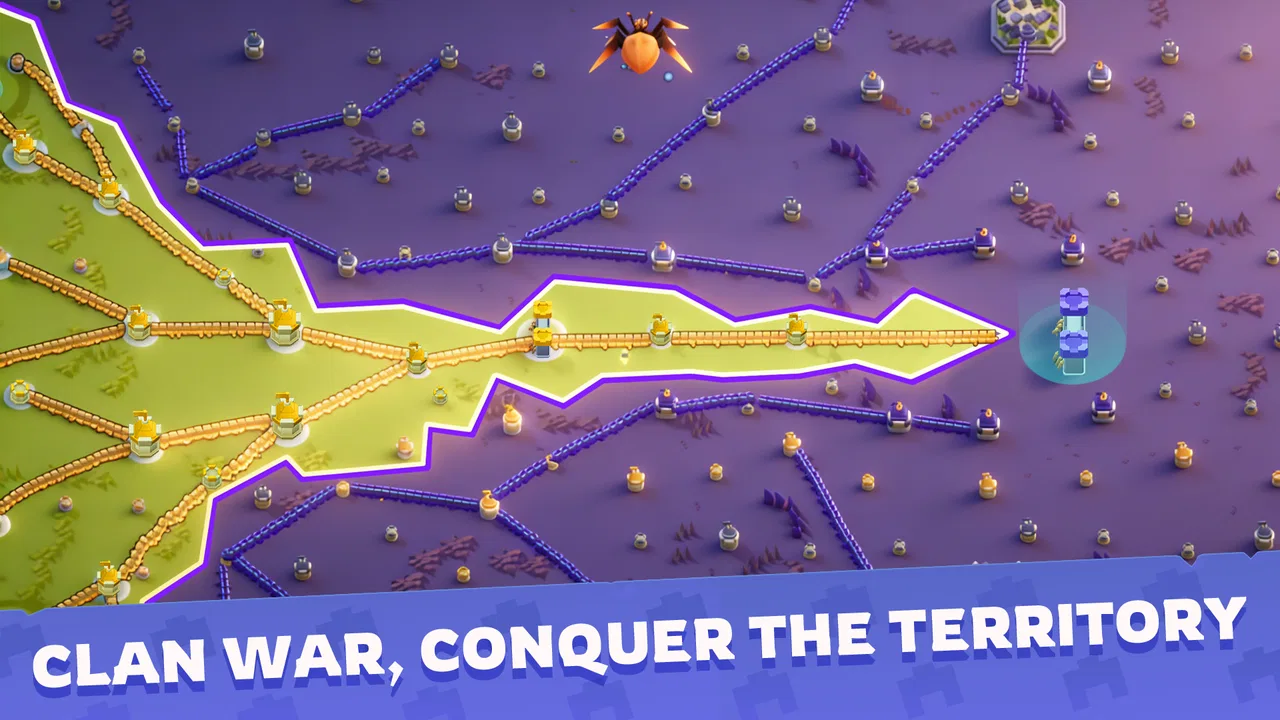
War Inc: Rising is a strategy-based game where players build and manage their own military base. The primary objective is to expand your base, create a powerful army, and engage in battles against other players or AI opponents. Success in the game requires strategic planning and tactical execution.
02Is War Inc: Rising free to play?
Yes, War Inc: Rising is free to download and play. However, it offers in-app purchases that can enhance gameplay, such as buying resources or unlocking advanced features more quickly. Players can enjoy the game without spending money, but purchases can provide a competitive edge.
03What are the system requirements for War Inc: Rising?
For Android devices, War Inc: Rising requires Android 5.0 and up, while iOS users need iOS 10.0 or later. The game also requires a stable internet connection for optimal performance. Ensure your device has sufficient storage space and meets these requirements for a smooth gaming experience.
04Does War Inc: Rising support multiplayer gaming?
Yes, War Inc: Rising supports multiplayer gaming, allowing players to engage in real-time battles with opponents worldwide. Players can join alliances, collaborate with friends, and compete in global leaderboards. This feature enhances the game's strategic depth and community interaction.
05How does War Inc: Rising handle player progression?
Player progression in War Inc: Rising is achieved through completing missions, winning battles, and upgrading your base and army. As you progress, you'll unlock new units and technologies. The game balances progression with challenges, ensuring a rewarding experience for both new and seasoned players.
Pros
- Engaging real-time strategy gameplay.
- Detailed graphics enhance immersion.
- Regular updates with new content.
- User-friendly interface and controls.
- Strong community and multiplayer modes.
Cons
- Some in-app purchases are pricey.
- Occasional connectivity issues.
- Can be battery-intensive.
- Steep learning curve for newcomers.
- Limited offline gameplay options.

War Inc: Rising
Gallery